Talking to kids about hijab can feel delicate—like holding a butterfly in your hands. You want to guide, not squeeze; to teach, not preach. This guide on Hoor Hijab n Abayas is about how to talk to younger girls about hijab in gentle, simple words, using stories, role-play, and everyday moments—like sunlight through a window—easy, warm, and natural.
What is Hijab in Simple Words?
Think of hijab like a soft shelter—like an umbrella that keeps your values dry in the rain.
Hijab means modesty. It includes:
- Clothes that are not too tight or see-through.
- A scarf that covers the hair, neck, and chest (for older girls and women, based on family and scholar guidance).
- Manners and speech that are kind and respectful.
In short: Hijab = modest dress + modest behavior.
Why do Muslims Wear Hijab? (Kid-friendly)
Use pictures and feelings more than rules. Try lines like:
- “Hijab is a way to respect ourselves, like wrapping a gift with care.”
- “It’s part of our faith, like prayer and kindness.”
- “It helps us focus on character, not just looks—like reading a book for its story, not only its cover.”
- “Different families do it in different ways. We learn, practice, and grow.”
Before You Begin: Mindset For How to Talk to Younger Girls About Hijab
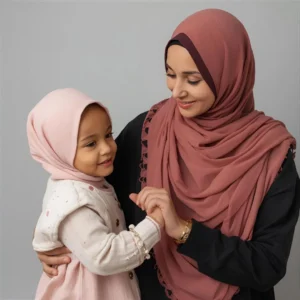
- Be gentle: Aim for curiosity, not pressure.
- Be real: Share your own journey—what felt easy, what felt hard.
- Be steady: Repeat small lessons, like watering a plant.
- Be flexible: Culture and opinions differ. Say, “Let’s also ask our scholar/teacher.”
Age-wise Guide: How to Talk to Younger Girls About Hijab
Ages 4–6: Planting seeds (like training wheels)
- Keep it playful: dress-up corners, mirror time, scarf colors.
- Teach body respect: safe touch rules, private vs. public.
- Use stories more than rules: “This scarf makes me feel cozy and strong.”
Ages 7–9: Building habits (like learning bike balance)
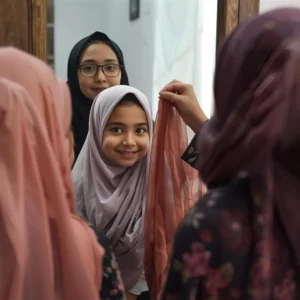
- Practice occasion-based modesty: mosque days, family events.
- Let her choose fabrics and colors; comfort comes first.
- Short lessons: “Loose beats tight,” “Thick beats see-through,” “Calm beats flashy.”
Ages 10–12+: Deepening meaning (like riding on your own)
- Talk about puberty kindly and factually.
- Discuss identity and belonging at school.
- Invite reflection: “When do you feel most confident in your scarf? Least? Why?”
The “8 Simple Rules” of Hijab
Note: Scholars differ. This is a simple kid-friendly list many families use.
- Cover well: Hair, neck, chest (for older girls/women).
- Loose, not tight: Clothes should not outline the body.
- Thick, not see-through: If it’s see-through, add a layer.
- Comfort first: You should be able to study, play, pray.
- Neat and simple: Not super flashy that seeks attention.
- Clean and respectful: Good hygiene, tidy scarf.
- Kind manners: Voice and words show modesty too.
- Consistency: Try your best; learn and improve over time.
Where Can I Find Age-appropriate Hijab Tutorials or Videos for Young Children?
Kids’ hijab tutorials on YouTube: search “kids hijab tutorial,” “easy hijab for kids,” or “no-pin hijab for kids.” You’ll find simple, step-by-step videos that show underscarf, basic wraps, and play-friendly styles.
Tip for parents: watch first, then watch together. Pick short videos with gentle tone and no heavy makeup for younger viewers.
Are There any Apps or Platforms that Teach Children about Hijab and Modesty?
Yes—look for broader Muslim kids’ platforms that include modesty themes:
- Miraj Stories (iOS/Android + web): Islamic stories, audiobooks, animations, and games for ages ~4–9; values like kindness, prayer, and modesty appear across the library.
- Muslim Kids TV (web + apps): cartoons, songs, eBooks, and activities for ages 2–12; covers Islamic character and everyday values (parents can browse for modesty-related content).
- Noor Kids (books/activities): character-building stories; some resources and activities explain modesty (ḥayāʾ) with kid-friendly metaphors and challenges.
Parent note: These platforms focus on broad Islamic values. For hijab-specific lessons, pair them with a short talk or story time at home.
Kid-Friendly Books about Hijab (great for bedtime)
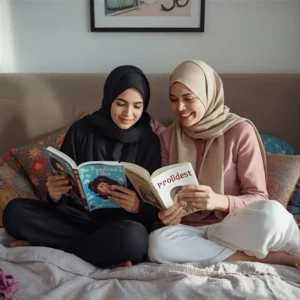
- Under My Hijab by Hena Khan: shows diverse women wearing hijab in different ways; warm, everyday scenes.
- The Proudest Blue by Ibtihaj Muhammad & S.K. Ali: a sister’s first day wearing hijab—confidence, pride, and family support.
Read aloud and ask: “What made the character feel strong? What helps you feel confident?”
Apps and Videos that Support How to Talk to Younger Girls about Hijab
Use media as the spice, not the meal. One short clip or story can open a door. Then you connect it to your values:
- “We saw how she chose a comfy style. Which style feels comfy to you?”
- “He explained modesty as self-respect. What does self-respect look like in school?”
Sample activities (like small lanterns lighting the path)
- Scarf Lab: Test fabrics—cotton vs. chiffon. Which feels cooler? Which slips? Chart results.
- Mirror Talk: Practice smiles and posture. Confidence is part of modesty.
- Role-swap: Child explains hijab to a teddy or sibling—in their words.
- Kindness Hunt: Modesty in actions—hold doors, use soft voice, share a snack.
- Color Journal: Draw a scarf of the day and write one feeling (“brave,” “calm”).
Ready-to-use Mini Scripts For How to Talk to Younger Girls About Hijab
“What is hijab?”
“Hijab means modesty. It’s how we dress and how we act. It helps us be respectful to ourselves and others—like wearing a seatbelt for our values.”
“Why do some wear it different?”
“Families and cultures teach different styles. What matters most is respect, comfort, and faith.”
“Do I have to wear it now?”
“We learn step by step. As you grow, we’ll talk more and decide together—with guidance from our faith.”
“What if someone teases me?”
“Families and cultures teach different styles. What matters most is respect, comfort, and faith.”
“Do I have to wear it now?”
“We learn step by step. As you grow, we’ll talk more and decide together—with guidance from our faith.”
“What if someone teases me?”
“Let’s practice replies: ‘This is my choice and my faith.’ Then tell a trusted adult. Your safety comes first.”
Coaching vs. Pushing: a quick comparison
| Topic | Coach Approach (Supportive) | Push Approach (Pressure) |
| Tone | Warm, curious, patient | Strict, demanding |
| Goal | Build meaning + habits | Force instant compliance |
| Language | “How does this feel?” “Let’s try options.” | “Wear it or else.” |
| Choice | Lets child pick fabrics/colors | One style only |
| Outcome | Confidence and consistency | Resistance and hiding |
| Example | “Loose is comfier—want to test two styles?” | “Stop asking. Do it.” |
FAQs
What is hijab in simple words?
Modesty in clothes and behavior. For older girls/women, it includes covering hair, neck, and chest—based on family and scholar guidance.
Why do Muslims wear hijabs for kids?
To teach self-respect, faith, and kind manners early—like planting seeds that grow into a tree.
Do Christians do hijab?
Some Christian groups cover hair in church or daily life (like some Orthodox, Catholic, or Anabaptist traditions). They don’t usually call it “hijab,” but the idea of modesty overlaps.
At what age should a girl start wearing hijab?
Families vary. Many connect regular hijab to puberty. Before that, some girls practice on special occasions. Ask your trusted local scholar for details.
Can a 10-year-old wear a hijab?
Yes, if she wants to and it’s comfortable. Focus on comfort and meaning, not pressure.
Do you start wearing hijab when you get your period?
Many families start around puberty. Details differ by scholars and culture. Learn together and decide with care.
Why do girls start wearing hijab?
For faith, identity, privacy, and self-respect—like choosing team colors you’re proud of.
When can a girl take her hijab off?
At home with close family (mahram), and in spaces where it’s not required. Teach where and when calmly.
What does it mean when a girl first wears a hijab?
It’s often a milestone—like a graduation from practice to habit. Celebrate gently.
How to encourage girls to wear hijab?
Use stories, comfort fabrics, choices, and role models. Praise effort, not just outcome.
How to convince a girl to wear a hijab?
Shift from “convince” to “coach.” Explain meaning, answer questions, try styles, give time, and respect her feelings.
How do I encourage my daughter to wear a hijab?
Make it her journey: let her choose colors, teach care routines, plan “scarf days,” and pair with acts of kindness.
Is it haram for a girl to not wear a hijab?
After puberty, many scholars consider hijab an obligation for Muslim women, but guidance and practice differ. Teach with mercy and wisdom and consult trusted local scholars.
What to say to a girl who started wearing hijab?
“Mabrook! I’m proud of your courage. How can I support you at school and activities?”
What to say to someone who started wearing hijab?
“May Allah keep you firm and happy. If you need rides, scarf pins, or gym-friendly styles, I’m here.”
Why would someone suddenly start wearing a hijab?
A new understanding, a role model, a life change, or simply growing into her faith—like a flower that opens when the sun feels right.
Comparison Table: Age Focus (extra quick view)
| Age | Focus | Simple practice | Parent cue |
| 4–6 | Feelings & play | Dress-up, colors | “How does this fabric feel?” |
| 7–9 | Habits & choices | Mosque days, comfy styles | “Loose vs. tight—let’s test.” |
| 10–12+ | Meaning & identity | School plans, role-models | “What helps you feel confident?” |
Short, heart-first lessons (like little bridges)
- “Your body is precious—you choose how to cover it.”
- “Modesty is also how we speak and how we treat others.”
- “We try, we learn, we grow—no shaming.”
- “Ask me anything. I will listen.”
Scripted Micro-Moments You Can Use Today
- Morning mirror: “Two scarves today—flowy or cotton? Your choice.”
- School prep: “If someone asks about your scarf, try: ‘It’s part of my faith and it helps me feel calm.’ Want to practice?”
- PE day: “Let’s find a snug, breathable undercap so you can run free.”
- Family gathering: “We’ll pack a light wrap in case you want it. No stress.”
- After a hard day: “I’m sorry it felt tough. Your feelings matter. Tomorrow we’ll make a plan that fits you.”
Safety and Comfort Checklist
- Breathable fabric for warm days (cotton/viscose blends).
- Undercap to keep hair tucked during play.
- Snag-free pins or magnet pins (with adult help).
- Gym-friendly styles (sports hijabs or tube scarves).
- Spare scarf in the school bag.
- Talk to teachers: seating near fans, PE adjustments.
Story Time Suggestions (pair reading + talk)
- Read Under My Hijab; ask, “Who inspired you most, and why?”
- Read The Proudest Blue; ask, “What helped her stay confident?”
For Schools and Community Groups
- Host a “modesty through character” day: kindness stations, quiet voices challenge, service activity.
- Invite role models to share positive stories (focus on confidence, not policing).
- Set anti-bullying norms: name-calling and scarf-pulling are not tolerated.
A Gentle Note on Differences
Islam is practiced across many cultures. Households follow different scholars. When questions get complex, say:
“Let’s ask our trusted scholar/teacher so we learn the best way for our family.”
Putting It All Together
Here’s a simple pattern you can reuse—like a favorite recipe:
- Start with feeling (“Hijab helps me feel calm and confident”).
- Add a picture (umbrella, gift wrap, lighthouse).
- Offer a choice (fabric, color, style).
- Practice a moment (mirror, PE, a reply to questions).
- Close with care (“I’m here to help you learn, always”).
Short Answers for Parents Asking How to Talk to Younger Girls About Hijab
- Keep it story-first; rules come later.
- Comfort and safety beat fancy styles.
- Invite voice and choice; pressure backfires.
- Use books, apps, and short videos as helpers, not the main teacher.
- Celebrate small steps, like “mosque day scarf” or “no-pin style.”
A Final Word
Remember, how to talk to younger girls about hijab is like planting a seed in soft soil—small care, every day, grows strong roots.
Apps and books can light the path, but your warmth is the sunshine.
If you guide with kindness, choices, and meaning, confidence will bloom—steady as a sunrise.