
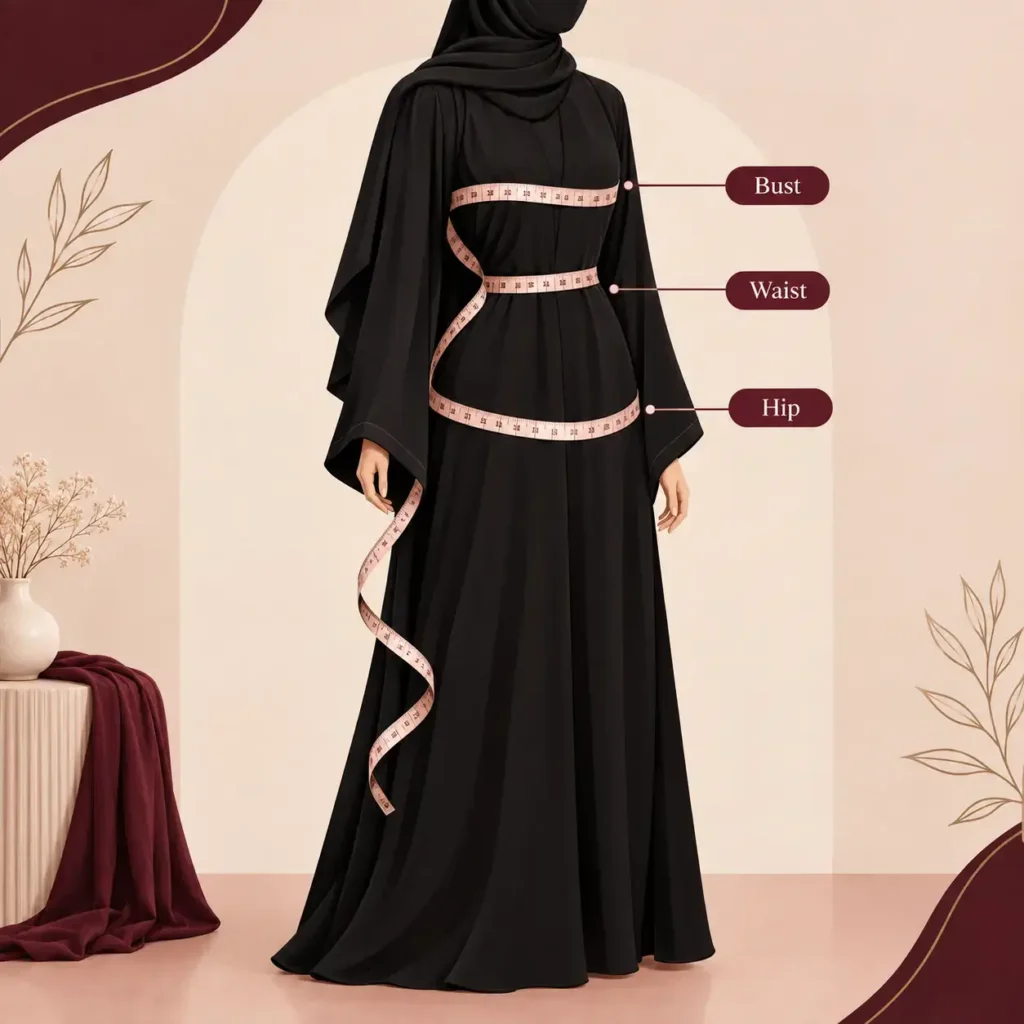
Abaya sizing doesn’t work the same way as regular clothing sizes, which is exactly why so many first-time buyers end up ordering the wrong fit. At Hoor Hijab & Abayas, this is one of the most common questions we get before a purchase, so here’s a complete walkthrough of what Abaya size actually means, how to measure yourself at home with items you already own, and how to read a size chart correctly the first time.
What Does Abaya Size Mean?
An Abaya size describes the garment’s bust, waist, hip, and length measurements, not a dress size in the way you’d find in Western retail. Because an Abaya is designed to drape over the body rather than sit close to it, a size chart is built around how much room the fabric gives at each point, not how snugly it fits.
How Abaya Sizing Differs From Regular Clothing Sizes
A size that fits you in jeans or a fitted dress won’t necessarily match your Abaya size, because Abayas are cut with intentional ease through the shoulders, bust, and hips. Most brands size Abayas by height and body measurements rather than standard numeric sizing, so it’s worth measuring yourself specifically for this purchase rather than assuming your usual size will carry over. For a broader look at how clothing measurement generally works across garment types, this measuring guide is a helpful starting point.
How to Measure Yourself for an Abaya at Home
You don’t need a professional fitting to get accurate numbers. A flexible tape measure, a mirror, and five minutes are enough.
What You’ll Need
- A soft measuring tape (not a rigid ruler)
- A fitted top and bottoms, or thin clothing you can measure over accurately
- A mirror, or a second person to help keep the tape level
Step-by-Step: Bust, Waist, Hip, and Length Measurements
1. Bust: wrap the tape around the fullest part of your chest, keeping it level and snug but not tight, all the way around your back.
2. Waist: measure around your natural waistline, just above your belly button, where your torso naturally bends when you lean to one side.
3. Hips: measure around the widest part of your hips and seat, usually about 8 inches below your natural waist.
4. Length: measure from the top of your shoulder straight down to where you want the Abaya to end, typically ankle-grazing or floor-length, ideally in the shoes you’ll actually wear it with.
Common Measuring Mistakes to Avoid
- Pulling the tape too tight, which gives you a smaller number than your actual size
- Measuring over bulky clothing, which adds inches that aren’t really there
- Measuring length while barefoot when you plan to wear heels or sandals with the Abaya
- Skipping the waist measurement because the Abaya is loose, sizing still relies on all three points together
How to Read an Abaya Size Chart
Once you have your three measurements and your desired length, compare them against the specific size chart for the Abaya you’re buying rather than a generic chart, since cuts vary between styles even within the same brand.
Standard Abaya Sizing Reference
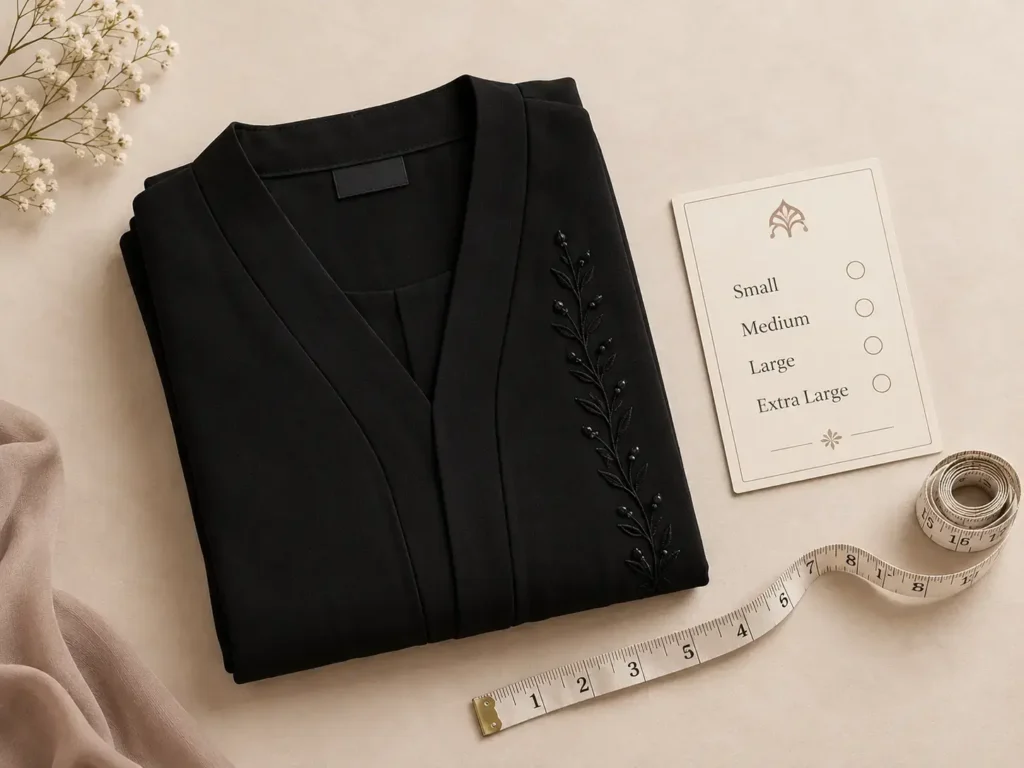
- Small: Bust 36-38 in, Waist 30-32 in, Hips 38-40 in
- Medium: Bust 39-41 in, Waist 33-35 in, Hips 41-43 in
- Large: Bust 42-44 in, Waist 36-38 in, Hips 44-46 in
- Extra Large: Bust 45-47 in, Waist 39-41 in, Hips 47-49 in
These ranges are a general reference. Every product at Hoor’s Closet lists its own exact measurements in the product description, so always check the individual listing before ordering.
What to Do If You’re Between Two Sizes
When your measurements fall between two sizes, size up rather than down. Because Abayas are meant to skim rather than cling, a slightly looser fit still looks intentional, while a size that’s too small will pull at the bust and hip and shorten the sleeve length.
Choosing the Right Abaya Size for Your Body Type
Your measurements tell you which size to order, but your body type affects which cut within that size will actually look best. We cover this in full in our guide to choosing the right Abaya for your body type, but here are the sizing basics for a few commonly asked-about shapes.
Best Sizing Tips for Curvy Women
Size according to your bust and hip measurement rather than your waist, and expect the waist to sit looser. An A-line cut, like Emerald Grace, is cut generously through the hip so it won’t cling even at the correct size. A beaded, more fitted style such as Plum Elegance works well once you’ve confirmed your measurements against its specific chart.
Sizing Guidance for Petite Women
Order by your measured height rather than sizing down overall, since shortening only the length keeps the shoulders and bust fitting correctly. Hem length is the adjustment, not overall size. A single focal point of detail, like the tassel collar on Noor Nights, keeps a shorter frame from looking swallowed by the garment.
Sizing Guidance for Tall Women
Double-check the length measurement against your actual height with shoes on before ordering, since a standard length can end several inches above the ankle on a taller frame. A fuller, floor-length cut like Coco Drape is cut with extra length in mind.
Special Sizing Cases
Abaya Size Guide for Children
Children’s Abayas are usually sized by age range rather than the bust, waist, and hip measurements used for adults. Measure height and chest circumference and compare against the age-based chart on the specific listing, since growth spurts mean it’s worth sizing up by one range if your child is between ages.
Getting a Custom Fit
If your measurements don’t align well with standard sizing, whether that’s an unusually long torso, significant difference between bust and hip size, or a specific length requirement, reach out before ordering. Custom adjustments are easier to make before a piece is cut than after it arrives.
Frequently Asked Questions
Are Abaya sizes true to size?
Generally yes, but Abayas run with more built-in ease than fitted Western clothing, so an Abaya in your usual size will typically feel looser than you expect. This is intentional, not a fit issue.
What if I’m unsure about my Abaya size?
Take your own measurements rather than relying on your regular clothing size, and size up if you fall between two sizes on the chart. When in doubt, a slightly looser Abaya is far easier to wear well than one that’s too tight.
What measurements do I actually need to take?
Bust, waist, hips, and desired length are the four measurements every Abaya size chart is built around. Shoulder width is occasionally listed as well for structured styles, but it’s not required for most standard cuts.
Conclusion
Getting your Abaya size right comes down to four accurate measurements and reading the size chart for the specific piece you’re buying, not your usual clothing size. Once you have those numbers, ordering becomes far less guesswork, and the right cut, once you know your size, will always look more intentional than the largest size you could find.