
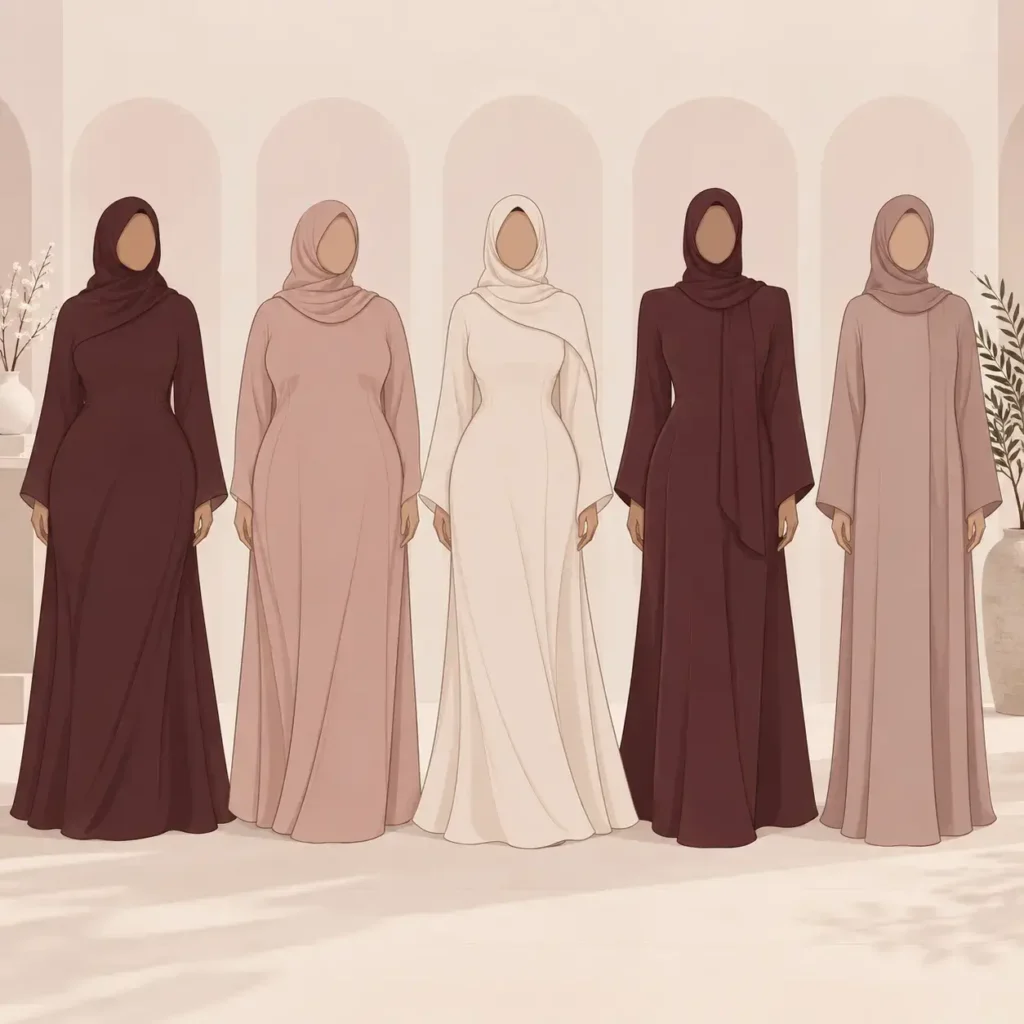
Choosing the right abaya for your body type comes down to more than picking a size off a rack. The difference between an abaya that hangs well and one that overwhelms or clings in the wrong places almost always comes down to understanding your body shape first, then choosing the cut, length, fabric, and color that work with it.
At Hoor Hijab & Abayas, this is one of the questions we get asked most, so this guide walks through every step, from identifying your shape to picking the exact silhouette that suits it, so your next abaya purchase is the right one the first time.
Understanding Body Shapes Before You Buy
Before you look at a single abaya, it helps to know your own silhouette. Abayas are forgiving garments by nature, but the ones that photograph and feel the best are still chosen with a body shape in mind.
Common Body Shape Categories
Most women’s bodies fall into one of five broad categories: pear (hips wider than shoulders), apple (fuller midsection, slimmer legs), hourglass (balanced shoulders and hips with a defined waist), inverted triangle (shoulders wider than hips), and rectangle (shoulders, waist, and hips are similarly proportioned). None of these are better or worse than another. They simply respond differently to where an abaya adds volume, where it nips in, and where it falls straight.
How to Identify Your Own Body Shape at Home
Stand in front of a mirror in fitted clothing and look at three points: your shoulder width, your waist definition, and your hip width. Whichever of those is widest, or whether they’re roughly equal, tells you your category. If you’re unsure, measuring is more reliable than eyeballing, which is covered next.
How to Measure Yourself for an Abaya
Getting the right abaya size isn’t just about your dress size elsewhere. Abayas are measured differently, and a few extra minutes with a tape measure prevents a lot of returns.
Body Measurements That Matter Most
- Bust: measure around the fullest part, keeping the tape level across your back
- Waist: measure at your natural waistline, just above the belly button
- Hips: measure around the widest part of your hips and seat
- Length: measure from shoulder to the point where you want the abaya to end, usually ankle-grazing or floor-length
Reading an Abaya Size Chart
Most abaya size charts run larger than standard clothing sizes because the garment is meant to drape rather than sit close to the body. When in doubt, size up rather than down. Every listing at Hoor Hijab & Abayas, available through Hoor’s Closet, includes exact measurements in the product description so you can match your own numbers before ordering.
Loose Fit vs Fitted Abaya Sizing
A loose fit abaya is cut with extra room through the shoulders, bust, and hips and skims the body without touching it, which is the most universally flattering option across body types. A fitted abaya follows the waist more closely and works best on hourglass and rectangle shapes that want to show more definition. If you’re between sizes, loose fit is the safer choice.
Best Abaya Styles by Body Shape
Pear-Shaped Bodies
If your hips are wider than your shoulders, look for an abaya with structure or detail at the shoulder and neckline to balance the silhouette, and let the fabric fall loosely from the hip down rather than clinging. A tassel or embellished collar, like the one on Noor Nights, draws the eye upward and creates that balance.
Apple-Shaped Bodies
A fuller midsection is best flattered by an abaya that skims rather than clings through the stomach and falls in a straight or A-line shape from just below the bust. Avoid anything belted tightly at the natural waist. A softly draping fabric like the crinkle nida in Midnight Drift moves with the body instead of outlining it.
Hourglass Figures
If your shoulders and hips are balanced with a defined waist, you can wear almost any cut, but a slightly more fitted style will actually show off the proportion you already have. A beaded or embellished waist and neckline, like Plum Elegance, plays this up nicely.
Inverted Triangle Bodies
Broader shoulders relative to the hips look most balanced in an abaya that adds soft volume from the waist down and keeps the shoulder line simple. A minimalist, single-button silhouette such as Slate Serenity avoids adding extra bulk at the shoulder.
Rectangle Body Shapes
When shoulders, waist, and hips are similar in width, a cinched or gently fitted waist creates the appearance of curves. Patterned fabric, like the windowpane print on Grid & Grace, also adds visual dimension that a plain silhouette wouldn’t.
Choosing an Abaya for Plus-Size and Curvy Figures
Plus-size and curvy figures are consistently underserved by abaya sizing that simply scales a straight-cut pattern up without adjusting where the fabric falls. The fix isn’t more fabric everywhere, it’s fabric placed correctly.
Cuts That Flatter Wider Hips and a Fuller Bust
Look for an A-line or butterfly cut that widens gradually from the bust down, rather than a straight column cut that can cling at the hip and gape at the bust simultaneously. Deep, rich solid colors like the bottle green in Emerald Grace or the deep maroon in Wine Whisper read as elegant rather than shapeless, and both are cut generously through the hip.
Common Plus-Size Fit Problems and How to Avoid Them
- Sleeves that are tight at the upper arm even when the body of the abaya fits, look for a kimono or dropped-shoulder sleeve instead
- Length that rides up in the front when seated, size up rather than choosing a shorter length
- Fabric that’s too stiff to move with the body, prioritize a soft nida or crepe over a heavier structured cloth
Choosing an Abaya for Petite Women
On a shorter frame, an abaya that’s cut for an average or tall height can overwhelm the body and make you look like you’re wearing the garment rather than the other way around.
Length Guide for Shorter Heights
As a general rule, hem the abaya to just brush the top of the foot rather than pooling on the floor. Many petite customers find that ordering true to their measured height, rather than their usual clothing size, gives a cleaner result than sizing down overall.
Avoiding Abayas That Overwhelm a Petite Frame
Skip heavy embellishment concentrated at the hem and oversized sleeves, both of which add visual weight to a smaller frame. A single design focal point, such as the tassel detail on Noor Nights or the beading on Plum Elegance, is more flattering than embellishment spread across the whole garment.
Choosing an Abaya for Tall Women
Best Lengths and Cuts for Taller Frames
Taller frames can carry longer, more dramatic silhouettes well, including floor-length hems and fuller butterfly sleeves that would overwhelm a shorter frame. A flared or fuller cut like Coco Drape makes the most of extra height instead of looking like it’s been stretched to fit.
Comparing Abaya Cuts and Silhouettes
A-Line vs Butterfly Abaya
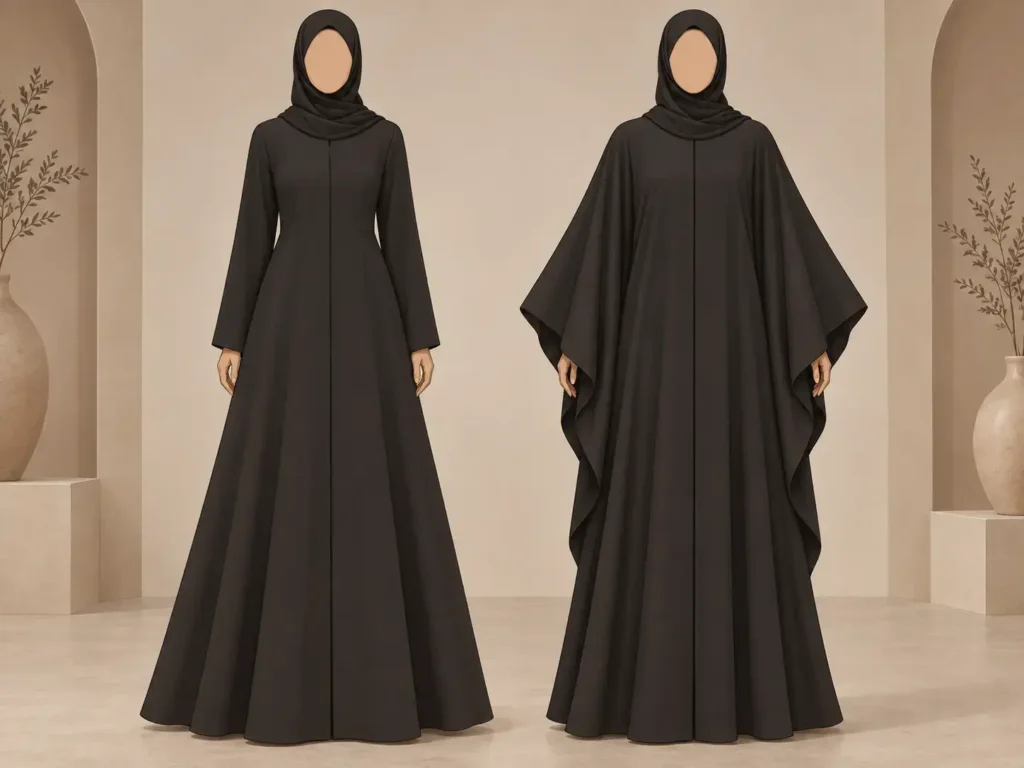
An A-line abaya narrows at the shoulder and widens gradually toward the hem, suiting pear and plus-size figures especially well. A butterfly abaya has wide, dramatic sleeves that taper at the wrist and is more forgiving through the bust and upper arm, making it a strong choice for apple shapes and fuller busts.
Straight-Cut vs Flared Abaya
A straight-cut abaya falls in a single column from shoulder to hem and suits rectangle and hourglass shapes that want a clean line. A flared abaya adds movement and volume from the waist down, which works well for pear shapes and taller frames that can carry the extra fabric.
Open Abaya vs Closed Abaya
An open abaya, worn over an outfit and left unbuttoned or lightly tied, creates a slimming vertical line down the center of the body, which is especially flattering for apple and plus-size figures. A closed abaya, like the single-button Slate Serenity, offers more coverage and a cleaner silhouette for hourglass and rectangle shapes.
Choosing the Right Fabric, Color, and Pattern
Fabrics That Flatter Different Body Types
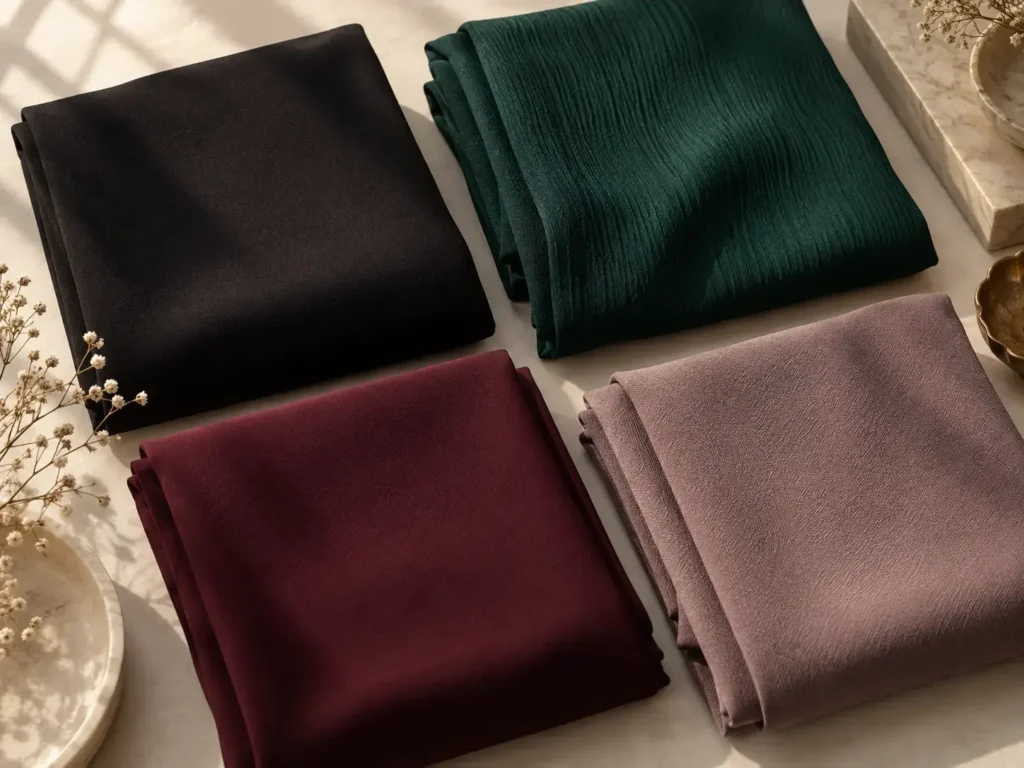
Nida is the most versatile abaya fabric because it drapes rather than clings, which makes it forgiving across almost every body type. A crinkle or embossed texture, like the dusty mauve in Velvet Whisper, adds visual texture without adding bulk. For more on how fabric choice affects how a garment sits and moves, see our guide to the best hijab fabrics for every season, which covers many of the same weights and weaves used in abayas.
Colors and Patterns With a Slimming Effect
A solid black abaya does create a slimming effect because it removes visual break points across the body, which is part of why it remains the most popular color. But deep jewel tones and dark neutrals do the same job while offering more variety, and a subtle windowpane pattern like Grid & Grace adds dimension without disrupting the slimming line the way a bold, bright print would. Vertical detailing, whether in a seam, a button placket, or a print, elongates the body regardless of shape.
Common Mistakes to Avoid When Choosing an Abaya
- Choosing your regular clothing size instead of measuring specifically for the abaya
- Picking a length before checking it against your actual height with shoes on
- Assuming a stiff, structured fabric will hide the body better than a soft, draping one, it usually does the opposite
- Loading up on embellishment in multiple places instead of choosing one focal point
- Ignoring sleeve width when the rest of the abaya fits well
Frequently Asked Questions
What abaya style suits my body shape?
Pear shapes suit A-line cuts with detail near the neckline, apple shapes suit open or straight-fall abayas, hourglass figures suit fitted or belted styles, inverted triangles suit simple shoulders with fuller lower volume, and rectangles suit cinched waists or patterned fabric for added dimension.
Does a black abaya make you look slimmer?
Yes. Black, along with other deep solid colors, removes visual contrast across the body, which creates a slimming effect regardless of body shape.
How should an abaya fit?
An abaya should skim the body without pulling at the bust, hip, or shoulder, and should move freely when you walk or sit. It should never feel tight enough to see the outline of the body underneath.
What abaya size should I buy?
Measure your bust, waist, hips, and desired length, then compare those numbers against the specific size chart for the abaya you’re buying rather than relying on your regular clothing size.
Conclusion
The right abaya isn’t the one that’s simply your size, it’s the one whose cut, fabric, and length work with your body’s proportions. Once you know your shape and have accurate measurements in hand, choosing between an A-line, butterfly, straight, or flared silhouette becomes a much easier decision. That’s exactly what we’ve built every piece around at Hoor Hijab & Abayas. Browse the full range of cuts, colors, and fabrics in Hoor’s Closet to find the one that fits you best.