The cut of an abaya gets most of the attention, but the fabric is what actually decides how it feels to wear, how it photographs, and how long it lasts. At Hoor Hijab & Abayas, Nida, crepe, and chiffon are the three fabrics we’re asked about most, and each one behaves differently once it’s on the body. This guide breaks down what each fabric actually is, how they compare side by side, and which one is right for your abaya or hijab.
Why Fabric Choice Matters for an Abaya
Two abayas can share the exact same cut and still feel completely different to wear, simply because of the fabric underneath. Fabric decides whether the abaya skims the body or clings to it, whether it holds its shape through a full day, and whether it’s see-through enough to need a slip underneath.
How Fabric Affects Drape, Comfort, and Opacity
Drape is how a fabric falls and moves, comfort is how it feels against the skin over hours of wear, and opacity is simply how much light passes through it. Nida, crepe, and chiffon sit in different places on all three, which is exactly why one fabric can’t be the right answer for every abaya.
Nida Fabric Overview
What Nida Fabric Is Made Of
Nida is a woven synthetic fabric, typically a polyester blend, developed specifically for abaya and modest wear production. It isn’t a traditional textile with centuries of use the way crepe or chiffon are, it was engineered for this exact purpose, which is part of why it’s become the industry standard.
Nida Fabric Weight and Texture
Nida has a smooth, slightly matte surface with a medium weight, heavier than chiffon but lighter than most structured crepe. It holds a clean drape without clinging and resists wrinkling far better than lighter fabrics, which is why it travels and wears well through a full day.
What Nida Fabric Is Best Used For
Nida is the default fabric for everyday and classic-cut abayas because it balances opacity, structure, and comfort without needing a lining. It’s also why every current piece at Hoor Hijab & Abayas is made from Nida. Every listing at Hoor’s Closet is made from Nida, including Midnight Drift in a crinkle finish and Velvet Whisper in an embossed texture, both showing how differently Nida can read depending on how it’s finished.
Crepe Fabric Overview
What Crepe Fabric Is Made Of
Crepe can be made from silk, wool, polyester, or a blend, woven or twisted in a way that gives it a distinctive crinkled, slightly pebbled surface. That texture is the defining trait of any crepe fabric, regardless of fiber content.
Crepe Fabric Texture and Characteristics
Crepe has more body and structure than chiffon, with a matte finish and a texture you can both see and feel. It drapes with a bit more weight and resists clinging, which makes it forgiving across most body types.
What Crepe Fabric Is Best Used For
Crepe suits abayas that want a slightly more structured, formal finish, such as beaded or tailored styles, since the fabric itself already reads as polished without additional embellishment.
Chiffon Fabric Overview
What Chiffon Fabric Is Made Of
Chiffon is a lightweight, sheer, plain-woven fabric made from silk, polyester, or nylon. Its signature trait is a slightly rough, gauzy texture created by twisting the yarns in alternating directions before weaving.
Chiffon Fabric Texture and Characteristics
Chiffon is airy, soft, and almost weightless, with a fluid drape and noticeable sheerness. For a closer look at how chiffon’s texture and transparency compare with crepe specifically, this comparison guide breaks down the weave differences in more detail.
What Chiffon Fabric Is Best Used For
Because chiffon is sheer, it’s rarely used alone for a full abaya and works best as an overlay, sleeve detail, or lightweight layering piece paired with a fully opaque base fabric underneath.
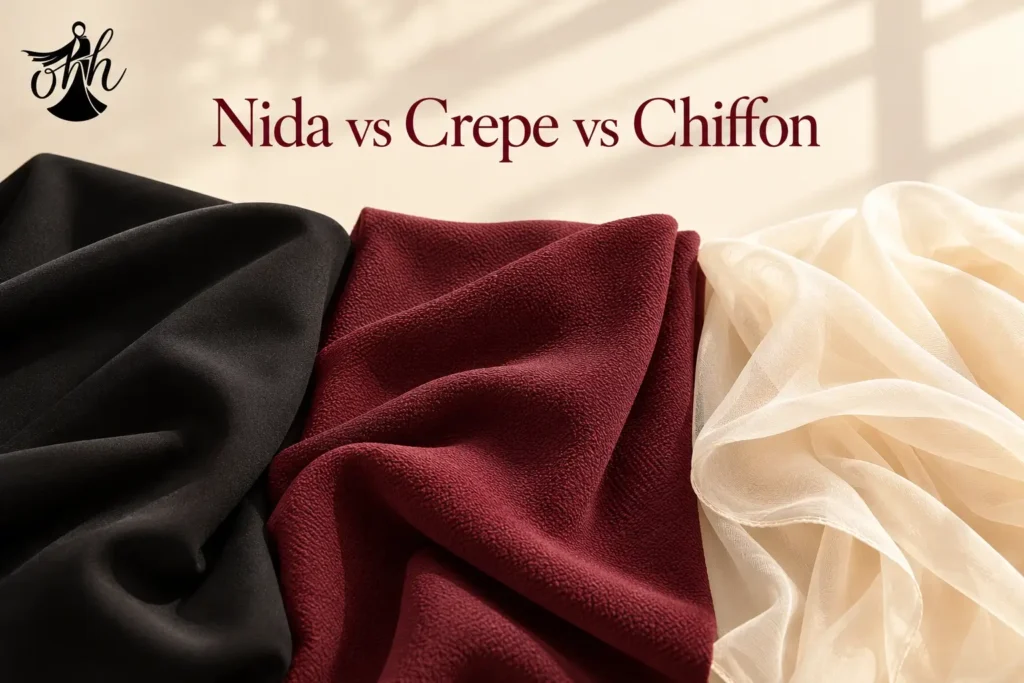
Nida vs Crepe vs Chiffon: Side-by-Side Comparison
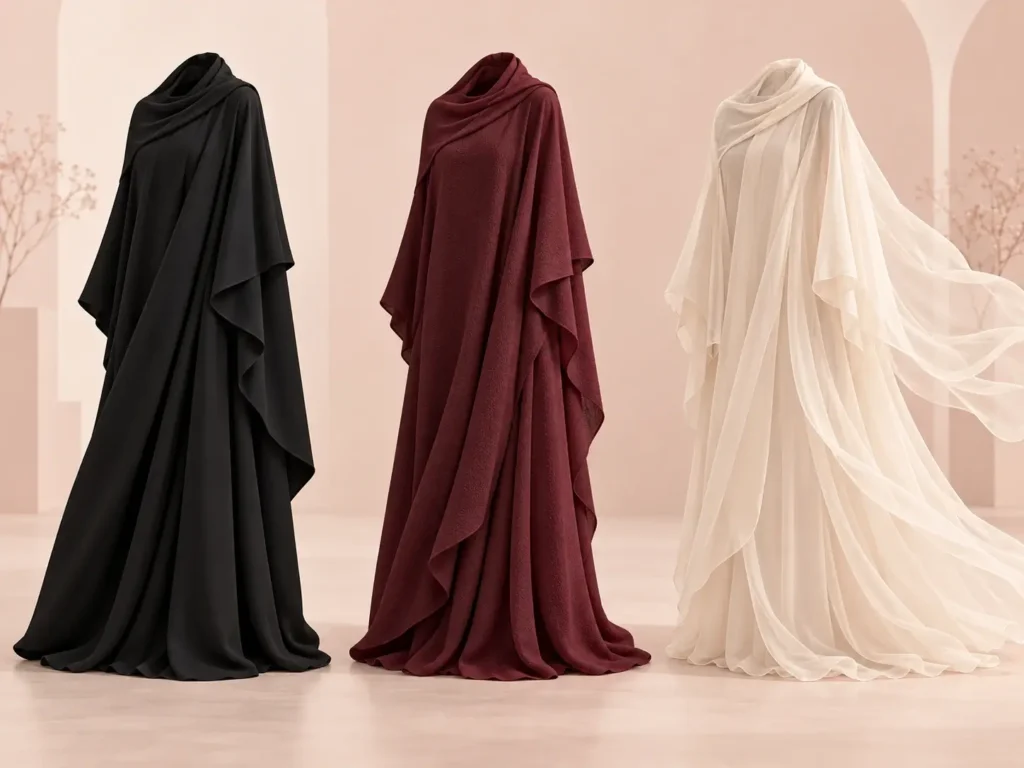
Weight and Drape Compared
- Nida: medium weight, clean structured drape
- Crepe: medium-to-heavy weight, textured drape with more body
- Chiffon: lightweight, fluid and floaty drape
Breathability and Comfort Compared
Chiffon is the most breathable of the three thanks to its open, airy weave, followed closely by Nida, which is engineered to feel light despite its structure. Crepe is the least breathable of the group, since its denser weave traps more heat, making it a better fit for cooler weather or air-conditioned settings.
Opacity: Which Fabric Is Least See-Through
Nida is the most opaque of the three and needs no lining in most cases. Crepe is also largely opaque, though lighter-weight crepes can thin out slightly in bright light. Chiffon is sheer by design and almost always requires a slip or base layer underneath.
Price and Availability Compared
Nida is widely produced specifically for abaya manufacturing, which keeps it consistently available and reasonably priced. Crepe and chiffon are general-purpose fashion fabrics used across many garment types, so pricing varies more depending on fiber content, with silk versions of either costing significantly more than polyester versions.
Choosing the Right Fabric for an Abaya
Best Fabric for a Flowy, Everyday Abaya
Nida is the strongest everyday choice because it drapes cleanly, resists wrinkling, and needs no lining. A classic single-button silhouette like Slate Serenity shows how far Nida’s drape can go without any extra embellishment.
Best Fabric for a Lightweight Summer Abaya
Chiffon layered over an opaque base, or a lighter-weight Nida, both work well in hot weather. Nida still edges ahead for most buyers since it achieves a breathable feel without the extra step of lining a sheer fabric.
Best Fabric for a Structured or Formal Abaya
Crepe’s natural texture and weight make it a strong choice for occasion wear, particularly beaded or embellished designs where the fabric needs to hold its shape under the extra detail.
Is Nida or Crepe Better for an Abaya?
For most everyday wear, Nida wins on comfort, opacity, and price. Crepe is the better choice specifically when you want a more formal, structured finish and don’t mind the slightly heavier feel.
Choosing the Right Fabric for a Hijab
Which Hijab Fabric Stays in Place Best
Crepe’s textured surface grips better than smoother fabrics, making it one of the more secure options for a hijab that needs to hold its pleats and shape through a long day without constant readjusting.
Best Lightweight Hijab Fabric for Summer
Chiffon is the most popular warm-weather hijab fabric for exactly this reason, its lightness keeps it breathable even in high heat, though its slight slipperiness means it benefits from an undercap for grip.
Which Hijab Fabric Is Easiest to Style
Jersey and crepe are generally easier for beginners since they hold folds and drape predictably, while chiffon’s fluid movement takes more practice to style consistently.
Is Nida Fabric Suitable for a Hijab?
Nida is used far more often for abayas than hijabs, since its structured weight suits a garment meant to hold its shape rather than drape softly around the face. Crepe and chiffon remain the more common hijab choices for that reason.
How to Care for Nida, Crepe, and Chiffon
Washing Instructions for Each Fabric
- Nida: machine washable on a gentle cycle with cold water, or hand wash for best longevity
- Crepe: hand wash is safest, especially for silk or silk-blend crepe, to protect its textured surface
- Chiffon: hand wash only, using cold water and a gentle detergent, since machine washing can snag its delicate weave
How to Remove Wrinkles Without Damage
Nida resists wrinkling on its own and rarely needs ironing. Hanging crepe and chiffon in a steamy bathroom after washing is often enough to release light creases without direct heat.
Can You Iron Crepe and Chiffon Safely?
Both can be ironed on a low setting with a pressing cloth between the iron and the fabric, but a handheld steamer is the safer option for either, since direct heat can scorch or flatten their texture permanently.
Common Mistakes When Choosing Abaya or Hijab Fabric
- Choosing chiffon for a full abaya without accounting for its sheerness
- Assuming all crepe is heavy, weight varies significantly by fiber content
- Machine washing chiffon, which shortens its lifespan quickly
- Picking fabric by look alone without considering the climate you’ll actually wear it in
Frequently Asked Questions
Is Nida more breathable than Crepe?
Yes. Nida is engineered to feel lighter and more breathable than most crepe, which has a denser weave that traps more heat.
Is Chiffon the same as Crepe?
No. Chiffon is a sheer, lightweight, plain-woven fabric, while crepe is heavier with a distinctive pebbled texture and more opacity. They behave very differently despite both being popular in modest fashion.
Does Chiffon work for an abaya on its own?
Rarely. Chiffon’s sheerness means it’s usually layered over an opaque base fabric rather than used alone for a full abaya.
Which fabric is best for a flowy abaya?
Nida offers the best balance of flow and structure for most buyers, while chiffon offers the most movement if layered correctly over a base fabric.
Conclusion
Nida, crepe, and chiffon each solve a different problem: Nida for everyday structure and opacity, crepe for formal texture and hold, and chiffon for lightweight movement and layering. Once you know what each fabric actually does, choosing between them comes down to how and where you’ll wear the piece. That’s the thinking behind every piece in the Hoor Hijab & Abayas collection. If you’re still deciding on cut and size alongside fabric, our guides to choosing the right abaya for your body type and the abaya size guide cover the rest.