Open and closed abayas look similar on a hanger, but they wear completely differently. At Hoor Hijab & Abayas, this is one of the first questions new customers ask, and the right answer depends less on trend and more on your daily routine, your body type, and how you plan to style it. This guide breaks down the real differences, compares comfort and practicality, and helps you choose based on occasion, season, and lifestyle.
What Is an Open Abaya?
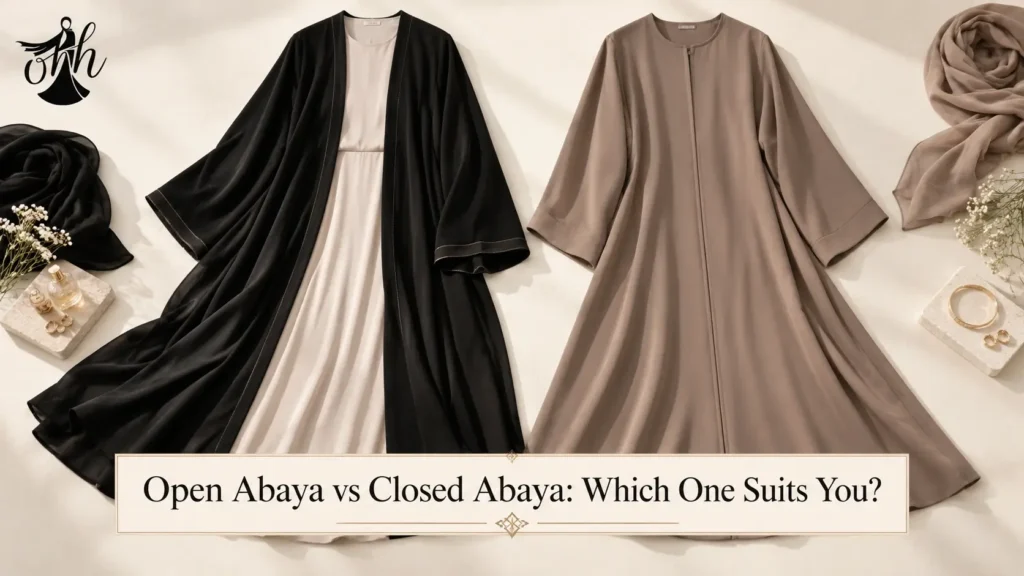
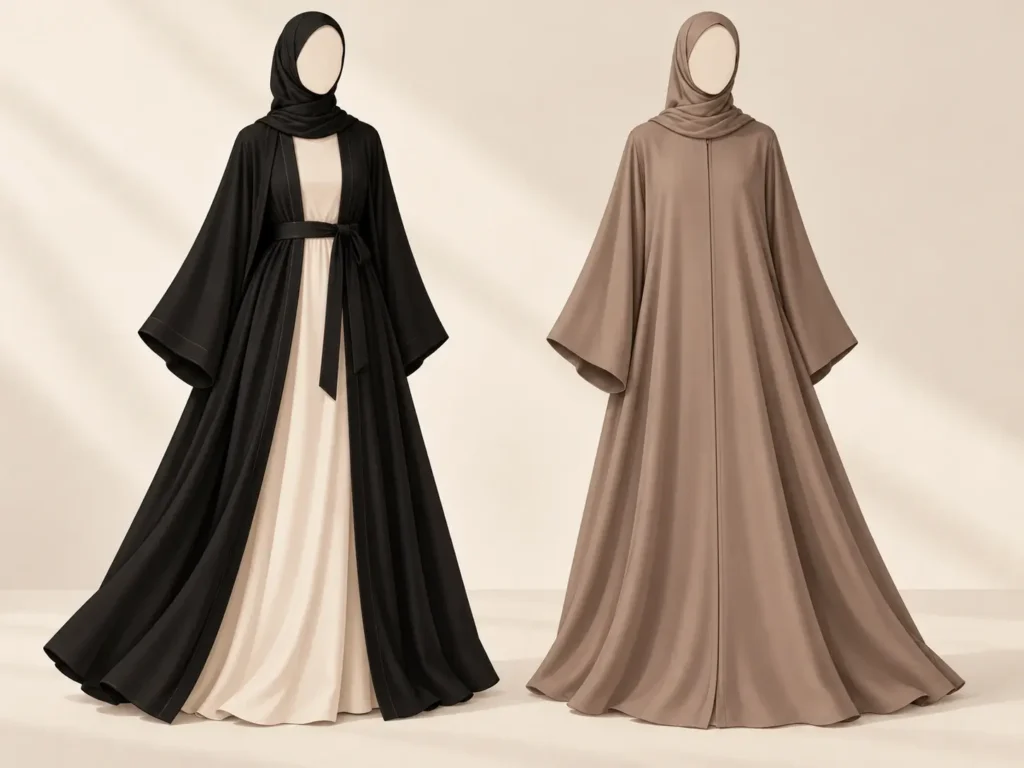
An open abaya has a front opening that runs the full length of the garment, closed with snaps, ties, or a belt rather than pulled over the head. It typically reveals an inner layer, a dress, trousers, or a slip, underneath. This structure makes it closer to a long coat or kimono than a traditional robe.
What Is a Closed Abaya?
A closed abaya is a single continuous piece with no front opening, pulled on over the head like a dress. It covers the body fully on its own, with no inner layer required. This is the more traditional silhouette, and it remains the most common style sold across the Hoor Hijab & Abayas collection.
Open Abaya vs Closed Abaya: The Key Differences
Structure and Opening Style
The core difference is construction. An open abaya is built like a cardigan or duster coat, with two front panels. A closed abaya is one unbroken piece, so there’s no panel to fasten or let fall open.
Comfort and Ease of Wear
Closed abayas go on in seconds and need nothing underneath, which makes them the simpler option on a rushed morning. Open abayas take slightly longer to put together since they’re styled as an outfit rather than a single piece, but many women find the adjustable front more comfortable in warm weather or while seated for long periods.
Layering and What Goes Underneath
A closed abaya needs no layering at all. An open abaya is built around layering, usually a long dress, a maxi skirt and top, or wide-leg trousers with a tunic. This layering is what gives the open style its more fashion-forward, outfit-like appearance.
Advantages of an Open Abaya
- Doubles as a coat-style layer over everyday outfits, not just occasion wear
- Easier to adjust for temperature by leaving it open or closing it with a belt
- Shows off an inner dress or outfit, giving more room for personal style
- Simple to put on and take off without pulling fabric over the head and hijab
Advantages of a Closed Abaya
- Full coverage in one piece, no inner layer or matching outfit required
- Faster to wear daily, especially for school runs or early starts
- More traditional silhouette, often preferred for prayer and religious settings
- Nothing to gap open in wind or while bending, sitting, or carrying children
Which Abaya Is More Comfortable?
Neither style is objectively more comfortable, it depends on your routine. Closed abayas win for simplicity and all-day coverage without a second thought. Open abayas win for breathability and adjustability, since you can loosen the front in heat or belt it tighter in colder weather. If you spend most of your day seated, many women find the open style less restrictive around the waist and hips.
Choosing Based on the Occasion
Best Abaya Style for Everyday Wear
Closed abayas suit most everyday routines best, since there’s no outfit to coordinate underneath. A reliable daily piece like Midnight Drift covers this need well. For more on building a practical daily rotation, see our guide to the best colors for abayas in daily use.
Best Abaya Style for Work
A closed abaya in a neutral tone remains the most practical option for an office setting, since it requires no layering decisions before a busy morning. An open abaya styled over simple trousers and a blouse works just as well if your workplace allows a more fashion-forward look.
Best Abaya Style for Formal Events and Weddings
Open abayas tend to shine at formal events, since the visible inner layer lets you build a complete outfit around jewelry, color, and fabric texture. For color pairing ideas specific to weddings, Eid, and evening events, see our guide to the best abaya colors for special occasions.
Open or Closed Abaya for Eid
Both styles work for Eid, but open abayas are especially popular for the celebration since they allow a matching inner dress or embellished layer to show. A closed abaya with gold or embroidered detailing works just as well if you prefer a simpler, single-piece look.
Best Abaya Style for Travel and Outings
Closed abayas travel better for long outings, since there’s no front panel to manage while carrying bags or moving through crowds. Open abayas are better suited to shorter outings where you want the flexibility to adjust for indoor and outdoor temperature changes.
Can You Wear an Open Abaya in Winter?
Yes, and it’s one of the style’s biggest strengths. An open abaya layers naturally over a long-sleeve dress, a sweater, or even trousers, so it works as outerwear rather than a single-season garment. A closed abaya can still be worn in winter, but it offers less room to add warmth underneath without the fit becoming tight.
How to Style an Open Abaya
What to Wear Under an Open Abaya
A long dress is the simplest option, since it needs no coordinating pieces. A matching maxi skirt and top, or wide-leg trousers with a fitted top, both work well too. Keeping the inner layer close in tone to the abaya creates a cleaner, more polished look.
How to Belt an Open Abaya
A fabric or leather belt at the natural waist defines shape and keeps the front from blowing open outdoors. For a more relaxed look, a belt worn low on the hips works well with looser, flowing fabrics. This guide to styling an abaya has more ideas on belting and layering if you’re new to the open style.
Open Abaya Outfit Ideas With a Dress
A solid-color dress under a patterned or textured open abaya creates contrast without clashing. For a more tonal look, matching the dress and abaya in the same color family keeps the outfit cohesive while still showing the layered structure.
Choosing the Right Abaya for Your Body Type
Open abayas tend to be more forgiving for pear and hourglass shapes, since the front opening and belt create a defined waistline. Closed abayas offer a cleaner, straighter silhouette that works well for apple and rectangle shapes. For a full breakdown by body type, see our guide on how to choose the right abaya for your body type.
Materials to Look for in an Open Abaya
Nida and crepe hold their shape well for an open front, falling cleanly rather than clinging or gaping. Lighter chiffon overlays also work, especially for occasion wear, though they usually need an added lining layer for coverage. Whichever fabric you choose, getting the length and fit right still matters more than the open or closed structure. Our abaya size guide walks through measuring yourself at home before you order.
Frequently Asked Questions
Is an open abaya better than a closed abaya?
Neither is objectively better, they suit different routines. Open abayas offer more styling flexibility, while closed abayas offer simplicity and full coverage in one piece.
Which abaya is easier to wear, open or closed?
Closed abayas are easier day to day since they need no coordinating layer underneath. Open abayas take a little more thought but offer more adjustability.
Are open abayas suitable for formal events?
Yes, open abayas are especially popular for formal events and weddings, since the visible inner layer allows for a more complete, styled outfit.
How should an abaya fit?
An abaya should sit comfortably at the shoulders without pulling, with sleeves long enough to cover the wrist and a hem that clears the floor by about an inch. Checking a sizing chart before you order is the most reliable way to get this right.
Conclusion
There’s no universal right answer between an open and closed abaya, only the one that fits your routine, body type, and the occasions you dress for most. Many women keep both in rotation, a closed abaya for daily simplicity and an open abaya for styling flexibility. Browse both styles in the current Hoor Hijab & Abayas collection at Hoor’s Closet to find the right fit for you.